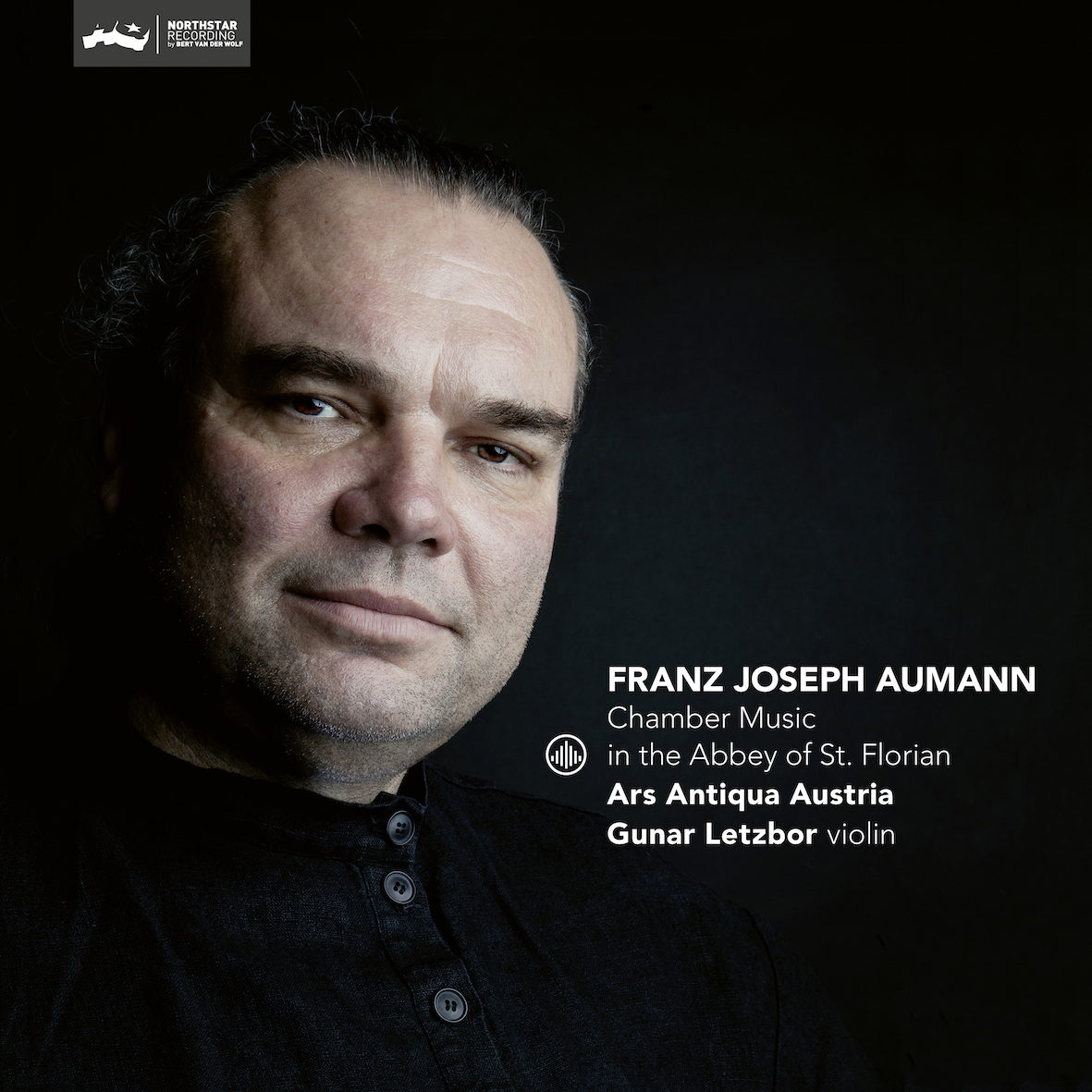
REVIEW: F.J. AUMANN: Chamber Music in the
Abbey of St. Florian
Pizzicato, 11.01.2022 - Es ist nicht nur die Enthüllung eines außergewöhnlichen Schatzes, sondern auch ein künstlerischer und diskographischer Erfolg, den man nur wärmstens empfehlen kann. - It is not only the unveiling of an extraordinary treasure, but also an artistic and discographic success that can only be warmly recommended.
SCHERZO, 04.2022 - La interpretación por parte del experimentado grupo Ars Antiqua Austria subraya, con su habitual solvencia, el carácter distinguido de la música.
positive-feedback.com, 13.01.2022 - The fine artistry of Ars Antiqua Austria illustrates the excellence of historically informed performance practice today.
Letzbor belässt den angenehm melodischen Stücken ihren genuinen Charme. Auch die schnellen Sätze werden tänzerisch und eher gemütlich musiziert. Besonders originell ist die Cassatio mit einer Sopranblockflöte (Flautello), die wie ein Vöglein über dem Streicherklang schwirrt. Sehr apart ist auch das Lied Die Hex auf einen Mundart-Text von Maurus Lindermayr, in dem dieser die Angst vor Hexen in der Bevölkerung auf die Schippe nimmt. Die abschließende Parthia in C zeigt ebenfalls einen eigentlich sehr einfallsreichen Komponisten, der in diesem Stück Trompeten und Pauken eine ganz spezielle Feierlichkeit erreicht.
Das Ensemble Ars Antiqua Austria musiziert ganz ausgezeichnet und führt uns durch ein bezauberndes Programm, das, wie es aussieht, zum ersten Mal aufgenommen wurde. Es ist nicht nur die Enthüllung eines außergewöhnlichen Schatzes, sondern auch ein künstlerischer und diskographischer Erfolg, den man nur wärmstens empfehlen kann.
Pizzicato, 11.01.2022 - Es ist nicht nur die Enthüllung eines außergewöhnlichen Schatzes, sondern auch ein künstlerischer und diskographischer Erfolg, den man nur wärmstens empfehlen kann. - It is not only the unveiling of an extraordinary treasure, but also an artistic and discographic success that can only be warmly recommended.
SCHERZO, 04.2022 - La interpretación por parte del experimentado grupo Ars Antiqua Austria subraya, con su habitual solvencia, el carácter distinguido de la música.
positive-feedback.com, 13.01.2022 - The fine artistry of Ars Antiqua Austria illustrates the excellence of historically informed performance practice today.

https://www.pizzicato.lu/kammermusik-eines-florianers/
Kammermusik
eines Florianers
11.01.2022. Rezension von Remy Franck
Letzbor belässt den angenehm melodischen Stücken ihren genuinen Charme. Auch die schnellen Sätze werden tänzerisch und eher gemütlich musiziert. Besonders originell ist die Cassatio mit einer Sopranblockflöte (Flautello), die wie ein Vöglein über dem Streicherklang schwirrt. Sehr apart ist auch das Lied Die Hex auf einen Mundart-Text von Maurus Lindermayr, in dem dieser die Angst vor Hexen in der Bevölkerung auf die Schippe nimmt. Die abschließende Parthia in C zeigt ebenfalls einen eigentlich sehr einfallsreichen Komponisten, der in diesem Stück Trompeten und Pauken eine ganz spezielle Feierlichkeit erreicht.
Das Ensemble Ars Antiqua Austria musiziert ganz ausgezeichnet und führt uns durch ein bezauberndes Programm, das, wie es aussieht, zum ersten Mal aufgenommen wurde. Es ist nicht nur die Enthüllung eines außergewöhnlichen Schatzes, sondern auch ein künstlerischer und diskographischer Erfolg, den man nur wärmstens empfehlen kann.
Franz Aumann (1728-1797) came to Sankt Florian
in 1753. In 1755 he became Regens Chori, one year before his
ordination to the priesthood. Gunar Letzbor, the conductor of this
production, says: « He composed ‘entertainment music’ of the highest
quality – pieces that were played for the amusement of invited
guests, on special occasions, or simply between the individual
courses of lavish banquets. Not many chamber music works have
survived in the archives of St. Florian Abbey – only a handful, but
these are of outstanding quality. The quintets are remarkable. Here
the master develops a particular chamber music style: two violins
are juxtaposed with two violas. Both groups of instruments have
equal status and enter into a lively discourse.»
Letzbor leaves the pleasantly melodic pieces with their genuine charm. Even the fast movements are played in a dance-like and rather leisurely manner. Especially original is the Cassatio with a soprano recorder (Flautello), which flutters like a bird above the string sound. The song Die Hex (The Witch), based on a dialect text by Maurus Lindermayr, is also very distinctive. The text pokes fun at the fear of witches among the population. The concluding Parthia in C also shows a composer who is actually very imaginative, achieving a very special solemnity with the use of trumpets and timpani.
Ars Antiqua Austria makes quite excellent music and leads us through a charming program that, so it looks, was recorded for the first time. It is not only the unveiling of an extraordinary treasure, but also an artistic and discographic success that can only be warmly recommended.
Letzbor leaves the pleasantly melodic pieces with their genuine charm. Even the fast movements are played in a dance-like and rather leisurely manner. Especially original is the Cassatio with a soprano recorder (Flautello), which flutters like a bird above the string sound. The song Die Hex (The Witch), based on a dialect text by Maurus Lindermayr, is also very distinctive. The text pokes fun at the fear of witches among the population. The concluding Parthia in C also shows a composer who is actually very imaginative, achieving a very special solemnity with the use of trumpets and timpani.
Ars Antiqua Austria makes quite excellent music and leads us through a charming program that, so it looks, was recorded for the first time. It is not only the unveiling of an extraordinary treasure, but also an artistic and discographic success that can only be warmly recommended.
The Artistry of
Ars Antiqua Austria
By Rushton Paul | Issue 119
The fine artistry of Ars Antiqua Austria illustrates the excellence of historically informed performance practice today. Fifty years ago, one would search in vain for this kind of performance quality. Today AAA demonstrates "top of the pile" standards for performance on period instruments. And they've been doing it since 1989.
By Rushton Paul | Issue 119
The fine artistry of Ars Antiqua Austria illustrates the excellence of historically informed performance practice today. Fifty years ago, one would search in vain for this kind of performance quality. Today AAA demonstrates "top of the pile" standards for performance on period instruments. And they've been doing it since 1989.
I admit it. I'm an early music addict, particularly
when performed on historic instruments. Gut strings and I are happy
together. Valveless trumpets are a treat. Minimal vibrato is okay by
me. So fortunate are we today to have such a broad range of excellent
artists applying historically informed performance practices in the
playing of the great composers of the Baroque period and earlier. I'm
in a happy place.
Why am I only now finding Ars Antiqua Austria? Oh, yes. I listened principally to vinyl up until a few years ago. My collection of recordings made post-1985 was severely limited.
So, while I've missed the first 30 years of Ars Antiqua Austria's music recordings, I plan to make up for lost time. They are marvelous!
And, more fun, Ars Antiqua Austria specialize in discovering and recording the works of lesser known Austrian composers. This opens for me a new world of composers whom I don't already know, such as in the instant recording of works by Franz Joseph Aumann.
Why am I only now finding Ars Antiqua Austria? Oh, yes. I listened principally to vinyl up until a few years ago. My collection of recordings made post-1985 was severely limited.
So, while I've missed the first 30 years of Ars Antiqua Austria's music recordings, I plan to make up for lost time. They are marvelous!
And, more fun, Ars Antiqua Austria specialize in discovering and recording the works of lesser known Austrian composers. This opens for me a new world of composers whom I don't already know, such as in the instant recording of works by Franz Joseph Aumann.
Franz Josef Aumann was an Augustinian Canon at Abbey
of St. Florian, to which Ars Antiqua Austria and Northstar return for
this recording. Bert van der Wolf, producer and recording engineer for
Northstar, says that AAA prefers to incorporate period rooms and
locations in the concept of historic performance as well as their
period instruments. For this recording, he says "St. Florian's Baroque
rooms are simply stunning, reverb engines avant la lettre and suit the
music like a perfect glove!"
Regarding the composer of the works on this album, Gunar Letzbor, violinist and founder of AAA, writes, "Aumann was born in the Austrian town of Traismauer in 1728 and studied music in Vienna, where he came across many important musicians of his time. It has not yet been established why in 1753 he relocated to St Florian, at the age of twenty-five. He must have been unusually talented, as two years later he became Regens Chori, one year before his ordination to the priesthood. From that point he remained in the service of the monastery until his death in 1797…
"His chamber music is scattered throughout Europe. He composed "entertainment" music of the highest quality—pieces that were played for the amusement of invited guests, on special occasions, or simply between the various courses of lavish banquets."
Sophisticated and stylish were the adjectives that immediately popped into mind as I listened to the opening work on this album. They apply to both the musical compositions and the performance skill with which the music is presented. Aumann may have spent his adult life tucked away in the monastery, but his musical sensibilities reflect a cosmopolitan outlook that belies the origin of the works.
Ars Antiqua Austria plays with ease, precision and tight ensemble, if just a smidgeon over-cautiously. In this recording, they lack some of the free abandon and joyfulness of, say, the Brecon Baroque. But skilled they are. I am most interested in exploring more of their recordings and have several sitting in the queue before me. So, more to come.
(Note: my listening partner comes to my rescue. She points out, "No, they are not playing over-cautiously. They are playing so the music can be danced to. 'Parthia' is partita, a suite. In this case a suite of dances. The meter is held constant because those dancing don't fall all over each other." So, silly me, who does not dance but who should have caught the alternative spelling for partita.)
In the meantime, I recommend this recording. It is a very nice introduction. And the recording quality from Bert van der Wolf and Northstar Recording is outstanding in every respect. Exactly as I have come to expect from his recordings.
Regarding the composer of the works on this album, Gunar Letzbor, violinist and founder of AAA, writes, "Aumann was born in the Austrian town of Traismauer in 1728 and studied music in Vienna, where he came across many important musicians of his time. It has not yet been established why in 1753 he relocated to St Florian, at the age of twenty-five. He must have been unusually talented, as two years later he became Regens Chori, one year before his ordination to the priesthood. From that point he remained in the service of the monastery until his death in 1797…
"His chamber music is scattered throughout Europe. He composed "entertainment" music of the highest quality—pieces that were played for the amusement of invited guests, on special occasions, or simply between the various courses of lavish banquets."
Sophisticated and stylish were the adjectives that immediately popped into mind as I listened to the opening work on this album. They apply to both the musical compositions and the performance skill with which the music is presented. Aumann may have spent his adult life tucked away in the monastery, but his musical sensibilities reflect a cosmopolitan outlook that belies the origin of the works.
Ars Antiqua Austria plays with ease, precision and tight ensemble, if just a smidgeon over-cautiously. In this recording, they lack some of the free abandon and joyfulness of, say, the Brecon Baroque. But skilled they are. I am most interested in exploring more of their recordings and have several sitting in the queue before me. So, more to come.
(Note: my listening partner comes to my rescue. She points out, "No, they are not playing over-cautiously. They are playing so the music can be danced to. 'Parthia' is partita, a suite. In this case a suite of dances. The meter is held constant because those dancing don't fall all over each other." So, silly me, who does not dance but who should have caught the alternative spelling for partita.)
In the meantime, I recommend this recording. It is a very nice introduction. And the recording quality from Bert van der Wolf and Northstar Recording is outstanding in every respect. Exactly as I have come to expect from his recordings.
TOP

AUMANN:
Música de cámara para la Abadía de San Florián
[...]
No es la primera vez que Letzbor se acerca a su música, tanto en grabación —recordamos, por ejemplo, una de sus numerosas misas de réquiem en Pan Classics— como en concierto. Nos muestra aquí el elegante y abiertamente clásico lenguaje musical de Aumann en unas obras —aunque con diversas denominaciones concretas, son, de hecho, quintetos— en las que no faltan los ecos de la música popular de la zona y que en tres casos presentan la peculiaridad de integrar en su orgánico un par de violas, lo que les confiere un aire un tanto melancólico y nostálgico. En otra ocasión, es el chispazo de un flautello el que rompe el dominio de la cuerda y, finalmente, en otro son dos clarinos los empleados en alguna ocasión, sin duda, solemne y festiva.
La interpretación por parte del experimentado grupo Ars Antiqua Austria subraya, con su habitual solvencia, el carácter distinguido de la música.
Música de cámara para la Abadía de San Florián
[...]
No es la primera vez que Letzbor se acerca a su música, tanto en grabación —recordamos, por ejemplo, una de sus numerosas misas de réquiem en Pan Classics— como en concierto. Nos muestra aquí el elegante y abiertamente clásico lenguaje musical de Aumann en unas obras —aunque con diversas denominaciones concretas, son, de hecho, quintetos— en las que no faltan los ecos de la música popular de la zona y que en tres casos presentan la peculiaridad de integrar en su orgánico un par de violas, lo que les confiere un aire un tanto melancólico y nostálgico. En otra ocasión, es el chispazo de un flautello el que rompe el dominio de la cuerda y, finalmente, en otro son dos clarinos los empleados en alguna ocasión, sin duda, solemne y festiva.
La interpretación por parte del experimentado grupo Ars Antiqua Austria subraya, con su habitual solvencia, el carácter distinguido de la música.
Mariano Acero Ruilópez